Fred Stein: From Displaced Lawyer to Photographer of Exile
Peter Stein speaks with Thomas Berlin about his father’s life, portraits, exile, and photographic legacy.
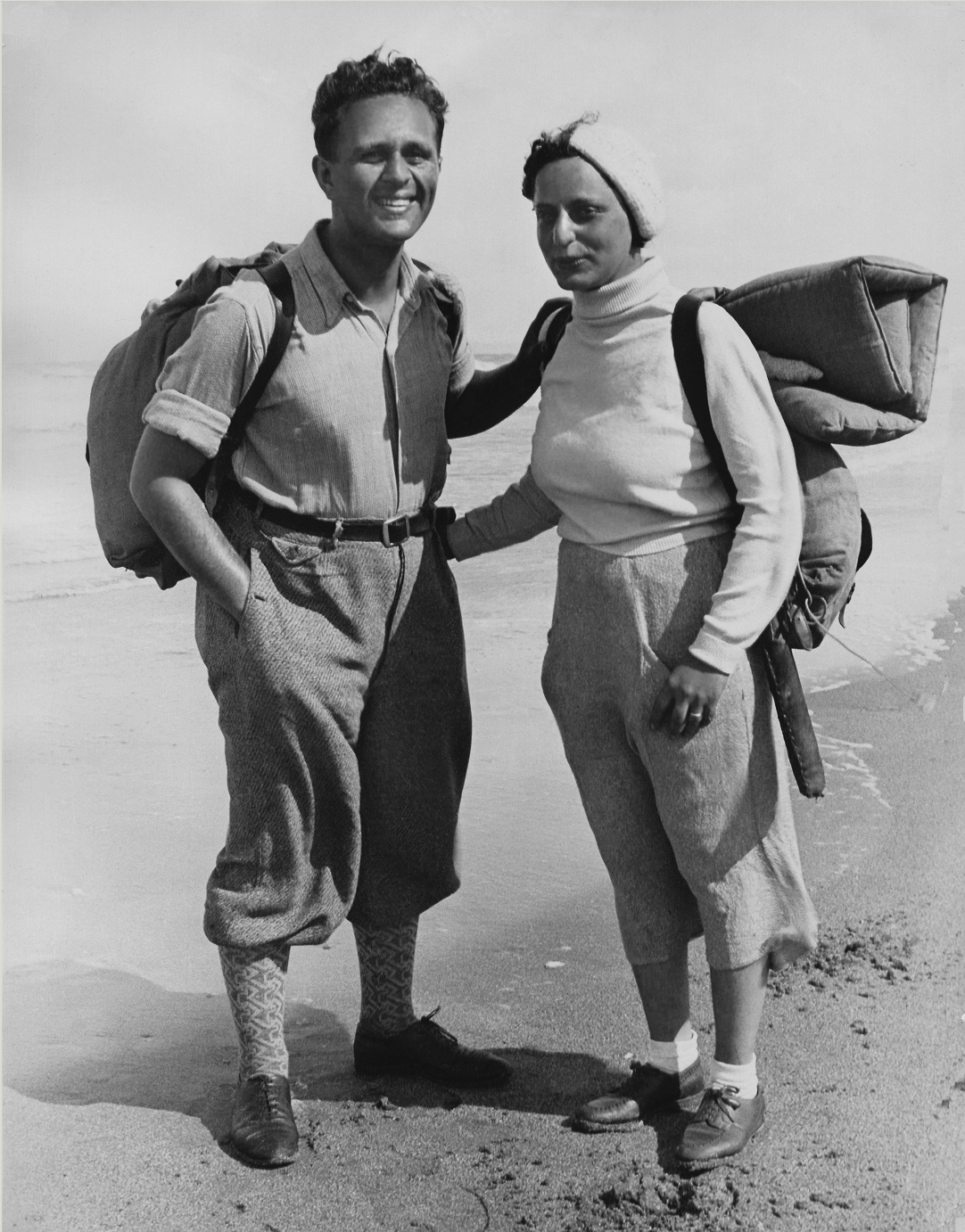
Fred Stein (1909-1967) grew up in Dresden. As a Jew and socialist, he was unable to pursue his legal career in Germany after the National Socialists came to power. In 1933, he fled with his wife Lilo to Paris and later continued on to New York. He became a photographic chronicler of the cities of his exile and of the intellectual world of the 20th century — as becomes clear in the following conversation between his son Peter Stein and Thomas Berlin.
Left: Fred Stein with his wife Lilo Stein
A preliminary note: Fred Stein belongs to a generation of European photographers of Jewish origin whose lives and work were shaped by National Socialism, antisemitism, flight, exile, internment, deportation, or murder. Some were able to build a new existence abroad. Others saw their careers destroyed or were murdered in concentration and extermination camps. At the end of this interview, there is further information about some of these photographers, including Gisèle Freund, Helmut Newton, Robert Capa and Dr. Erich Salomon. Their names give an impression of how closely the history of 20th-century photography is connected with Jewish exile, persecution, and loss.
Thomas Berlin: Peter, when it comes to talking about your father, I would like to start with his time in Dresden, his studies in law, and the rupture caused by National Socialism, which eventually led him to Paris. Your father was originally trained as a lawyer, or was on his way to becoming one. What do you know about what this profession meant to him?
Peter Stein: He wanted to be a public defender. He was very much a humanist, someone who wanted to help people who could not help themselves. That is how he approached law. He wanted to help people who could not afford lawyers.
You can also see that in his photography: he was a humanist, and he loved people. But he was also an intellectual, and he was brilliant. He had skipped two years at the Gymnasium in Germany, which was unheard of at the time, and I’m sure it still would be today. He then completed his legal studies at Leipzig University, graduating first in his class.
He was a brilliant person, and also very young because he had skipped those two years. He completed his legal studies in 1933, the same year Hitler came to power. In order to practice as a lawyer in Germany, you had to spend two years working as an intern in the state prosecutor’s office. One of the first laws passed under Hitler was that Jews could no longer work for the government. So he could no longer work in the courts, and he could never become a lawyer.
He was a committed socialist, and that was the intellectual basis for who he was and how he wanted to practice law: as a humanist who wanted to help people who could not help themselves.
From Law to Photography
Thomas Berlin: You said he wanted to help people. Could that be one of the reasons why he later became what I would describe as a people photographer? His portraits show a strong interest in people — not in product photography or in a more commercial kind of photography, for example.
Peter Stein: Yes, people certainly interested him. I suppose one can also be an artist and take pictures of products, but he was not a businessman at all. He was not interested in business, and he could not be successful in business.
When he went to Paris, he did not know what he was going to do to earn a living. At one point, he and a friend decided they would become insurance salesmen. The first thing they did was sell each other life insurance policies — and that was all they ever did. Neither of them was successful.
Fred was terrible at business. He was terrible at the business of photography. He was a great photographer, but a terrible businessman. He had no interest in promoting himself.
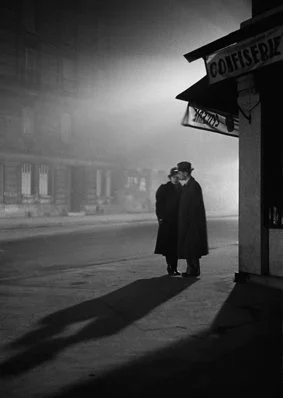
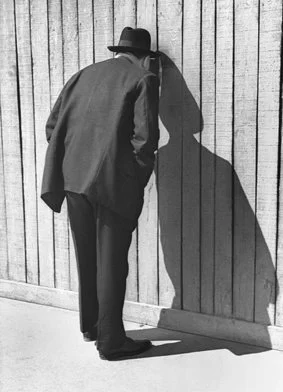
Paris 1934, 1936
Thomas Berlin: At the same time, perhaps his intellectual abilities helped him to come into contact with interesting people — and later to photograph them.
Peter Stein: He was interested in photographing people, but he was also interested in meeting them and talking to them — probably almost as much as in photographing them. Meeting world leaders and important people in various fields was very exciting for him.
That was his motivation in reaching these people through whatever means he could. He got friends to recommend him, and he found people through their publishers or through different organizations. He wanted to meet them and then photograph them. He saw himself as a collector — he called himself a headhunter.
Thomas Berlin: Would you say that his interest in people came first, and that photography followed from that interest?
Peter Stein: I’m not sure which came first, but they complemented each other: his interest in people and his interest in photography.
Of course, he was interested in people on the street as well — people who were not famous and people he did not know. He was an outsider in France and in New York. When he saw people on the street, he was fascinated by them: by their experiences, their lives, and how they related to their jobs and to their environment.
He was interested in unknown people as well as in very well-known people. I’m sure he engaged people in conversation all the time. Especially with the personalities he photographed, he generally knew who they were and knew their work pretty well, because he was an intellectual. He had read widely and went to museums and galleries all the time.
So he knew who the people were that he was photographing, what they stood for, and what they meant to him. He tried to take pictures that captured who he felt they were. If you can do that visually, that was one of his great talents.
Thomas Berlin: Do you see evidence that his political thinking and intellectual background shaped his visual language?
Peter Stein: That is an interesting question. No one has ever asked me that before.
I think his political beliefs shaped who he was as a person, and therefore who he was as an artist was certainly influenced by who he was as a person. If he knew that a writer was a very warm person, for instance, he would try to show that in his photographs.
He tried to reflect in his photography his intellectual understanding of who that person was in their field. I think that is as close as I can get to saying whether his intellect affected his photographs. There must have been a very close collaboration between his intellect and his artistry.
Paris: Exile, Politics, and the Beginning of a Photographic Life
Thomas Berlin: How should one imagine his life in Paris — between the emigrant scene, political uncertainty, and his photographic work? Paris was the place where he began to work professionally as a photographer.
Peter Stein: He photographed a lot of politically engaged people. He went to rallies and demonstrations of the Popular Front in Paris all the time. That was one of the main ways he started to make money: he would take pictures at speeches, demonstrations and rallies. He photographed the speakers and people he recognized through his own political activities. Then he would make postcards from those pictures and sell them at the next demonstration.
His politics and his photography were certainly intertwined. He was still very active politically in Paris, going to meetings, especially with other refugees. He would take pictures at those meetings of the various people who were there. Whether they were documentary pictures, or whether he got an appointment to see someone like André Malraux or Arthur Koestler, there was always this connection.
For instance, he went to the International Writers’ Congress for the Defense of Culture in 1935, a huge conference of writers against fascism. He photographed many of the people who were there in a documentary style — people like Heinrich Mann, Bertolt Brecht and many others. The people he photographed were people he was interested in on an intellectual level, but certainly also on a political level.
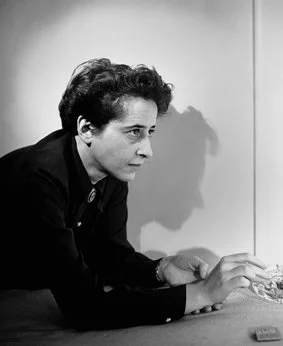
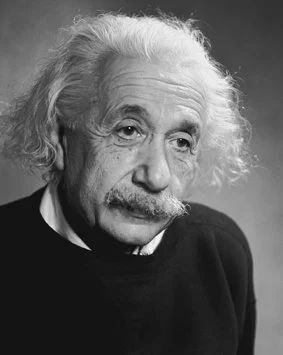
Hannah Arend (1944), Albert Einstein
Thomas Berlin: Did he mainly photograph charismatic, interesting or famous people, or did he also photograph so-called normal people?
Peter Stein: You can see in his photographs that he photographed people on the street all the time.
Thomas Berlin: But not in formal portrait sessions?
Peter Stein: Not in portrait sessions. But he did try to make money with portraits. He took some wedding pictures in France and pictures of friends who were famous, and he tried to make some money that way. But that is not what really interested him. He did recognize, of course, that he needed to make a living.
Thomas Berlin: As you mentioned, he was not the typical businessman. He started his photographic work in Paris after studying law in Germany. I have heard that his wife, Lilo Stein, was also part of this work. Was she perhaps something like his back office? What role did she play during this period?
Peter Stein: She worked as his assistant. That is not all she did. She also supported the family. I don’t know everything she did, but I know she worked in a toy factory for a while. It was owned by a socialist, and so she made some money.
She also accompanied him in his photography, and she did the spotting of his pictures. She went out with him when he photographed in the street. She was very supportive, and I’m sure she did the back office, as you say, because he certainly did not know how to do any of that.
New York: Freedom, Exile, and a New Visual Energy
Thomas Berlin: After his emigration to France, he later moved to New York. Could you tell me why? Was he interested in the United States, or was it simply necessary to leave Europe in order to be safe?
Peter Stein: He did not want to come to the United States initially. The United States was the seat of capitalism.
Thomas Berlin: That is why I am asking.
Peter Stein: Yes. He was a committed socialist, but he also wanted to be close to Germany. He and many other people felt that Hitler was not going to remain in power for very long. He wanted to be close to Germany so he could come back and help re-establish democracy.
That is why he did not, like many other Jewish people, try to get to the United States very early. He left Germany in 1933, which was very early, and he probably could have come to the United States fairly easily at that point. Many of my relatives did come to the United States, I think around 1935 or something like that. But he went to France.
Then, out of necessity, after France was invaded, one of the only safe places was the United States. Coming to the United States was a matter of necessity.
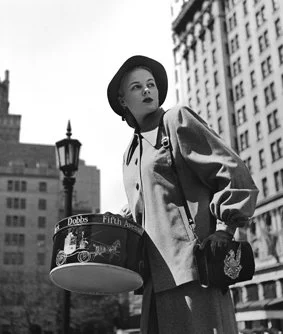
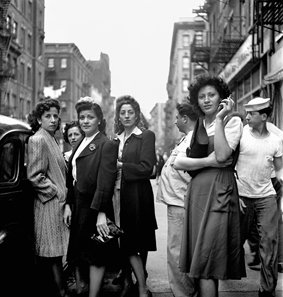
New York, Fifth Ave. 1946 — New York, Little Italy 1943
Thomas Berlin: Did New York give him a new sense of freedom, or did the feeling of exile persist for many years?
Peter Stein: Probably both. I know my parents felt very grateful and very free. Coming to New York was very liberating for them, because they no longer had to be afraid of being arrested at any moment. They were far away from the war; the war was across the ocean, and the United States was very strong.
There was a great feeling of freedom in the United States. It was unique and completely different. The difference between the United States and Europe was even greater then than it is today. Going from Germany to France had also been liberating for my parents, but coming to the United States was completely different from Europe.
There was a real sense of freedom even in simple things, like eating. You could get so much to eat. They could live relatively well. And just the thought of not being afraid — in France, the police could always ask for your papers. In the United States, nobody asked for your papers. People in the United States were much freer than they were in Europe.
Thomas Berlin: So there was this new freedom. But on the business side, it must still have been difficult for him.
Peter Stein: It was difficult, because he was just starting to get recognition in France. There were articles about him and by him in various papers. Even in England, he was getting some recognition. Then he had to start all over again at the bottom, especially in a country where art might not be appreciated in the same way as in Europe.
My father did not dress well. He did not know how to sell himself. The business of art is perhaps more important in the United States than it is in Europe. He was not a good businessman, so I don’t think he was able to sell himself quite as easily in the United States as he could in France.
In Europe, just being an artist — or being a good artist — might have been more important than in the United States. In the United States, if you are a good artist, people might ask: How come you don’t have a lot of money? How come you don’t dress beautifully? Whereas in Europe, you might be a good artist and be more bohemian. It’s hard for me to say exactly.
Thomas Berlin: What changed photographically when Fred Stein came to New York? How did this new city, this new country, affect his way of seeing?
Peter Stein: I think the energy of the United States was very different from Europe. The architecture showed that energy: the big, bold architecture of the United States. In the United States, I think his pictures became more graphic and somehow more vital. You feel the energy of the United States.
That might also be because the people were so different. There were so many different nationalities living in the United States. The areas where he did his street photography were so different from one another: Harlem, Chinatown, Little Italy, the Jewish neighborhoods. There was so much difference, and it was so strong and striking.
Then there was the architecture, the elevated trains, the tall buildings, the strength. You could feel the strength and power of the country, in contrast to a much quieter, gentler and more intellectual France. I think that affected him photographically.
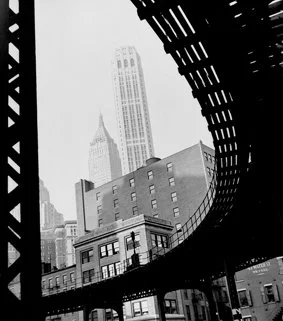
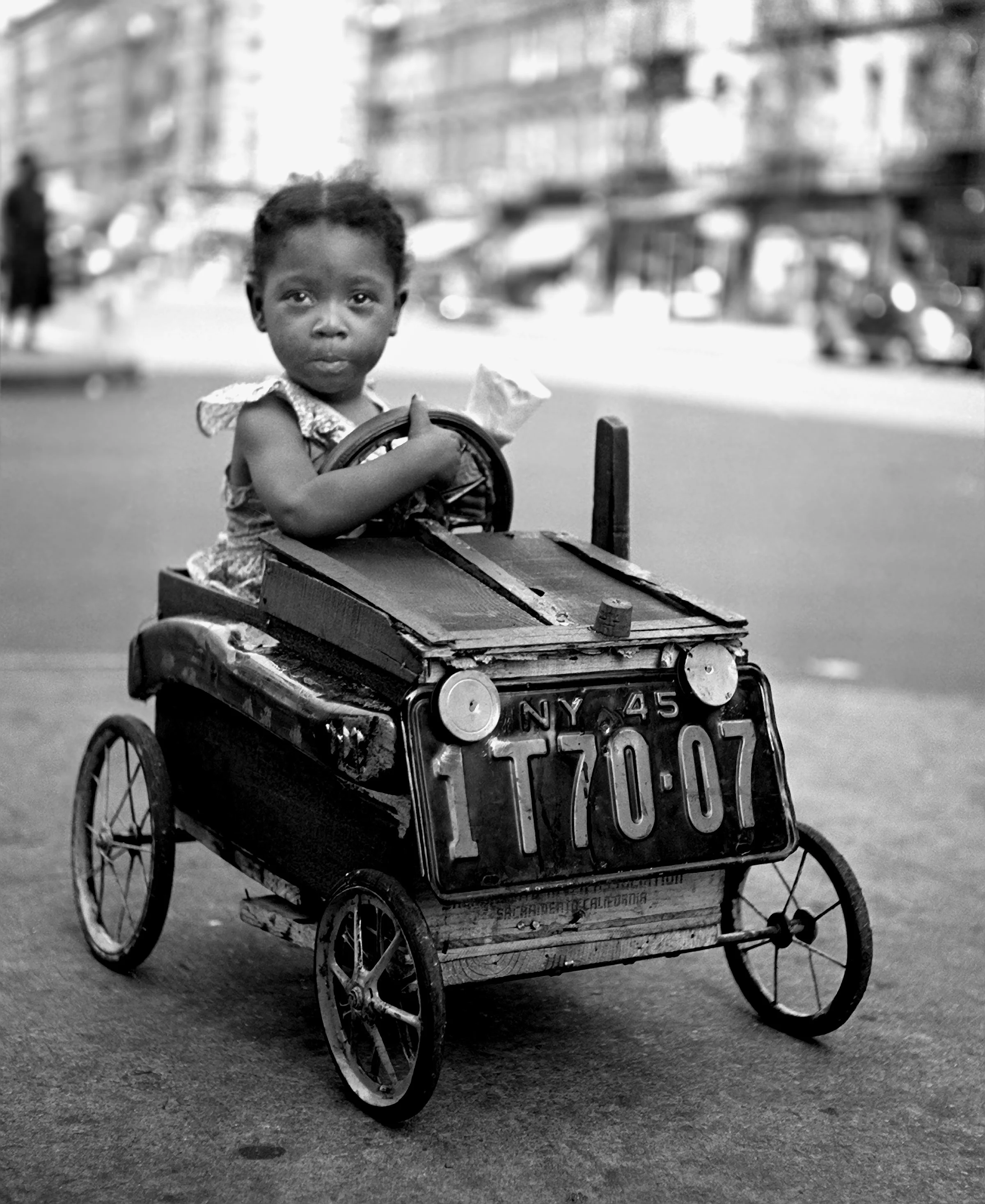
Thomas Berlin: I have a book published in 1947 called Fifth Avenue. It is a small book, and I bought it about ten years ago in an old bookshop.
Peter Stein: Very cool. I love that you have that book. That was the main book he published in the United States. It was published by Pantheon. I forget the name of the publisher, but he was also a German-Jewish refugee, so that is probably how Fred reached him and had the book published. I think it was pretty successful.
Thomas Berlin: You mentioned the Jewish publisher. At the moment, I am doing some research about Jewish photographers who left Europe during National Socialism — people like Dr. Erich Salomon, Helmut Newton and others. I found about 40 names.
Peter Stein: Photography was a field that was open to everybody. People lost their professions, and many lost their lives, but some could become photographers. I think a lot of people who would not have become photographers if the war had not happened did become photographers.
Thomas Berlin: How did his community change in New York? I am sure he also met many refugees there. But what changed regarding his friends and his community in the United States?
Peter Stein: I think his community was shaped by his politics. First of all, he maintained his German connections. He went to the German Consulate very often for parties and meetings. He also belonged to what is now called the Goethe-Institut. At the time, it was called the Goethe House. He went to the Goethe House all the time and photographed there — for them, but also for himself — at meetings and parties. He met people there.
He also had a lot of pictures published in Aufbau, which was a German-Jewish newspaper and very important in the immigrant community in New York. We lived in Washington Heights, which was a very large German-Jewish refugee area in uptown Manhattan. They called it the Fourth Reich because there were so many German refugees living there.
His group of friends were generally intellectuals from Europe, mostly German, but certainly some French as well. He also had other circles he was friendly with: Black intellectuals such as Langston Hughes and Richard Wright, and other people who were politically on the same socialist level as he was. Although he was not very active politically in New York, his friends and the people he associated with were, generally speaking, socialist-minded.
Thomas Berlin: How long did he feel like a refugee in the United States? Was there a point when he felt more American than refugee, or did both identities remain present?
Peter Stein: That is a conversation I never had with him. I think he always felt that he was German. He went back to Germany a few times. He spoke German with my mother all the time. I am sure that when he went to parties and to the German Consulate, he was always speaking German. So he knew he was German and a German refugee.
But he and my mother also felt deeply that they were Americans. They got their American citizenship, they voted, and he certainly followed American politics. He was not active in it, but he followed it very closely.
Thomas Berlin: Did he speak to you in German or in English, if I may ask?
Peter Stein: When I was very young, I started to stutter. The doctors told my parents that they should only speak to me in English. So I only spoke English. But they spoke German with my sister.
My parents also spoke French fluently and with no accent. My sister became a professor, and she went to the Lycée Français de New York. The reason she went there was that she got a scholarship because my father made a couple of calendar books, which he donated to the American War Relief for France. With the proceeds, they were able to buy a few ambulances. Because of that, she got a scholarship. My parents had no money, but she went to this very fancy French school on Fifth Avenue.
I went to regular public schools. My sister was a linguist: she spoke French, Spanish, German, Italian and English, and she became a professor of languages. I spoke English, and I had to learn French in school. I learned a little bit of German just by listening to my parents talking to each other — especially if they were talking about me. Then I was very interested.
Portraits as Encounters
Thomas Berlin: Peter, let us move to his photographic work. As I mentioned, I first knew Fred Stein as an architecture photographer because of the book Fifth Avenue. Some years later, I saw his portraits and thought, “Oh, is this the same Fred Stein?” I had known him through the architecture photographs, but of course he is now better known for his famous portraits and his street photography. Let us talk about his portraits and his portrait sessions.
Peter Stein: There are really three different ways in which he took portraits.
Number one: he got an appointment to see someone, and then he worked that way.
Number two: documentary situations. He would go to a meeting, a party or some kind of gathering and take someone’s picture there.
And number three: people would call him and ask to have their picture taken. Either they would call him, or he would get to someone. People calling him was very rare. It happened a few times, but not often.
He worked very quickly. He had his little Leica camera, and in New York he also had a Rolleiflex. He did not usually work in a formal studio situation. Every once in a while, he had a small studio. If somebody came to our house, he had a studio there. He also tried to have a few studios in New York, but it never worked out for very long. It was always too expensive. I think he somehow thought that people would call him, but that did not happen very often.
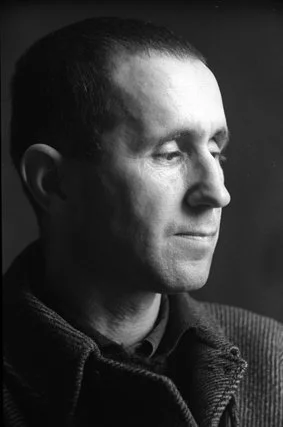
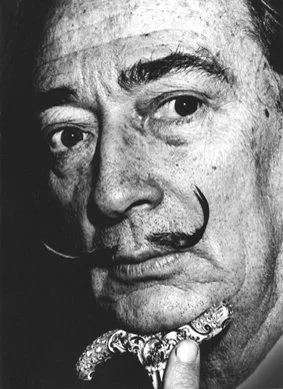
Berthold Brecht, Salvador Dali
Thomas Berlin: When you say he worked quickly, how long would such a portrait session roughly last?
Peter Stein: My guess is probably never more than 45 minutes, but that is just a guess.
He would go to people’s houses, for instance to Hannah Arendt. He photographed her from 1941 to 1967, so I guess for about 25 years. They became good friends. She would want pictures taken for a new book or something like that, or he would contact her to take her picture.
He did not put his camera on a tripod. It was always handheld, and he felt he could move quickly and that the subjects could move. He did not put them in a chair, make them sit still, put lights up and make it all formal.
Yousuf Karsh in Canada, for instance, was a famous photographer with three lights, posing Winston Churchill with his cigar. That was completely different from Fred. Fred would just talk to people and engage them in conversation. When they were doing something that he thought revealed their personality, that is when he would start taking pictures.
Thomas Berlin: When I look at Fred Stein’s portraits of Hannah Arendt, Albert Einstein, Marlene Dietrich and others, they seem very direct and unpretentious. How did he manage to create this connection with people, so that they do not appear to be posing? I am sure they were aware of the camera, but the pictures do not look staged.
Peter Stein: He got them into conversation. He engaged them in conversation. For instance, with Einstein, he spoke to him, and they enjoyed their conversation.
Thomas Berlin: So you are saying that he talked with people, and at some point something clicked?
Peter Stein: He always engaged them in conversation. It always clicked. He was a real intellectual, and he had very strong opinions. He would question people, agree with them or contradict them, but he had a strong intellectual basis from which he came.
He could get them thinking, which is always interesting. And then he would take their picture while they were talking.
Thomas Berlin: Was his intellectual capacity the most important part of that process, or did he also have a special talent for building trust?
Peter Stein: I don’t know. I know his intellectual capacity was huge, and that must have interested people. Usually, if you are being photographed, the person photographing you may not really know who you are. It may be an artist, or someone on assignment.
But here was somebody who was really engaging you and working your brain, so that you had to respond and think, as opposed to just posing.
I also think his humanity was evident in his street photography. He was not condescending to people. He was not looking down on children or poor people, and he was not pitying them. It was simply a very human approach. That was who he was.
In his street photography, when he photographs people, very often someone is relating to the camera. But they are not angry or hostile. You never see anger or hostility there.
Thomas Berlin: It looks like photography at eye level, as we would say in German.
Peter Stein: It is at eye level, especially with children. He would physically get down to eye level with children, which is why his photographs of children are so strong. I should send you the book of his children’s photographs. It is quite lovely.
Thomas Berlin: That sounds interesting. I only know his Fifth Avenue book.
Peter Stein: I’ll send you a few of his books as PDF files. They have some good essays in them.
Thomas Berlin: Do you know any anecdotes about individual portraits?
Peter Stein: The best one I know is with Einstein. He had a ten-minute appointment to photograph Einstein. People ask me how he got to him. He got to Einstein because one of Einstein’s assistants had gone to high school with Fred.
The assistant said to Einstein, “Would you be open to a German refugee photographer taking your portrait? It would be very helpful to him in his career. He has just come to the United States.”
Einstein hated having his photograph taken, but as a favor he said okay. He gave Fred a ten-minute appointment. After ten minutes, Einstein’s secretary came in and said, “You have to leave now.” Einstein said, “No, no, no, he has to stay.”
So from this ten-minute appointment, Fred ended up staying for two hours, and they had a great time together. Of course, they were talking in German. Fred could not talk to him on a scientific level, but he could talk to him on a human level. Fred was an expert in theology, literature and art. Einstein was an intellectual aside from being a scientist; he was a great humanist and humanitarian.
Thomas Berlin: Was this ability to speak with such famous people of the time something that set him apart from other photographers of that period?
Peter Stein: I don’t know, because I don’t know the other photographers. I am not really a photo historian. I would think probably yes. But it was also his interest in the people he photographed.
He was not out there photographing for money. Most of it was not on assignment. He was photographing for himself, and he photographed people he was interested in meeting and speaking with.
I don’t want to say that the photography was not as important as meeting these people. But it was equally important for him to meet and talk with people as it was to photograph them.
I remember being a kid at the dinner table, and my mother was always really impressed by whom he had photographed. I had no idea who they were. But it was a validation for him, for who he was, to have met all these great and famous people, to have shared his opinions with them and maybe even influenced them. I don’t know.
Thomas Berlin: Did he have any photographic role models?
Peter Stein: That is another thing I don’t know, but I would assume he did, because he read so much. I’m sure he read the photo magazines and knew other photographers.
I remember being with him at the Peerless Camera Store in Manhattan, and W. Eugene Smith was there. He introduced me to Eugene Smith.
Thomas Berlin: When I hear W. Eugene Smith’s name, I immediately think of the image of two children walking away from the camera into a clearing.
Peter Stein: Yes, yes. I don’t know that picture, but I know Eugene Smith was a great photographer. So he knew him. I don’t know if he knew him well personally, but he knew him.
He took a great picture of Robert Frank, and he took pictures of Robert Capa and André Kertész. I know he knew them, although I don’t know how well. He must have known their work, as well as the work of French photographers such as Henri Cartier-Bresson and Brassaï. I’m sure he knew their work in France, but I never had conversations with him about other photographers.
Thomas Berlin: I assume that the more you see, the more you are influenced by other styles.
Peter Stein: I would think so.
Thomas Berlin: Did he talk with you about composition, light and technique?
Peter Stein: Yes, he did. We would go to museums. When I became a cinematographer, composition was my strong point. I really did not have to think about it very much.
I took a lot of pictures as a young boy. He taught me in the darkroom how to develop film and how to print pictures. We would sometimes go out together taking pictures, and he would point things out: “Look, there’s a puddle there. Look at that reflection.” Or: “Look at the car, there’s a reflection on the bumper. That could make an interesting picture.”
We would take pictures together, and then we would print them. My mother would criticize our work or compliment our work.
Thomas Berlin: That sounds like a very nice education for you — growing up with photography not only as images, but also as a way of seeing and working.
Peter Stein: It was good. It was good when I was young.
Thomas Berlin: Did your family have its own darkroom?
Peter Stein: Yes, we always had a darkroom. I grew up in the darkroom.
The Archive and the Legacy
Thomas Berlin: Perhaps this is a good point to move from the family experience to the question of legacy. Let’s talk about the archive and about Fred Stein’s work today. I would like to connect Fred Stein’s work with the present and ask why it is still relevant today. You are working to promote his work and to keep his memory alive. What is your mission in running the archive? Is it primarily about remembering your father, or is there a broader purpose?
Peter Stein: Let me start by saying something that is not directly your question. My father had one major problem: he died very young. He died in 1967, before photography was really recognized as an art form. Photography really started taking off in the late 1970s and early 1980s.
Fred died at the age of 58 in 1967. Many of his contemporaries, who were on a somewhat similar level, lived into the 1970s and 1980s. They got galleries, and then the galleries helped them get museum shows, and they became famous. Fred was completely forgotten.
I always knew that I wanted to do something to promote his work. I always knew he was a great photographer. He was not only a pioneer of street photography in Paris in the 1930s; he also took more than 1,200 portraits of some of the most important intellectuals of the mid-20th century. Many of them I don’t know by name — you would probably know many more, especially the German people he photographed. But it is important for history, as well as for photography history, that his work is preserved and known.
I inherited the whole archive when my mother died in 1997. I had always thought, especially since I became a cinematographer and was making movies, that my father’s story would be a great movie. I was always promoting him in exhibitions and promoting his work. But I am not really a photography person. I don’t have those connections, and I don’t know photography history in that professional sense. Still, I would get shows in small art centers around New York, and I always thought it would be great to get him into a museum somewhere.
When my mother died in 1997 and I got the whole archive, I knew it would be important for me to start doing something with it. But I had my own career, and I did not want to make my father’s career my career.
Then I retired from shooting movies and became a professor of cinematography at NYU, New York University, in the Graduate Film School, which is a very famous film school. I taught there for 13 years and retired from there about 11 years ago. That was the perfect time for me to really start promoting his work.
I have had tremendous success, especially in Germany, which is interesting because most of his photography — at least his street photography — was done in New York and Paris. But we have had great success in Germany, and I am very grateful and thankful for that.
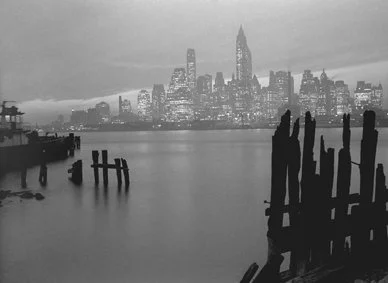
Thomas Berlin: How was his work preserved after his death? Do you have a physical archive, or do you also have a digital archive now? How do you handle the estate technically?
Peter Stein: I don’t do very much technically. I have all his negatives here in fireproof file cabinets. I have all his vintage prints in boxes. My home is controlled with air conditioning and heating, but I can’t afford a real archive to keep the collection.
I have all his correspondence and contact sheets. Everything is preserved here in my house. I have had a few offers from various archives to acquire the archive, but my children will take over after me. I have everything: the correspondence, the contact sheets, the vintage prints and so on.
Thomas Berlin: So for now, it remains something like a family mission?
Peter Stein: Yes.
Thomas Berlin: What about digitization? Has the archive already been scanned, or is that still an open task?
Peter Stein: I have digitized quite a few things, but there are thousands and thousands of images. I don’t have the time or the desire to digitize everything myself. It really needs a professional organization.
What I did once was hire a student for a summer to make contact-sheet scans of all the negatives. But those are contact sheets; each negative was not scanned individually.
Thomas Berlin: I find that interesting because you knew your father personally, from living with him. But working with an archive can also reveal sides of a person that one did not know before. What surprised you most while working with his archive? Is it the same Fred Stein you knew as a son, or did you also discover other parts of his life and work?
Peter Stein: Speaking with different curators taught me a lot. I don’t know if you know the curator Gilles Mora?
Thomas Berlin: No, I don’t know him.
Peter Stein: He is a well-known French curator. He came and looked through the whole archive — you will see him in the movie. He taught me a lot about photography history and about photography, especially in terms of the different themes that Fred was interested in and how he organized his pictures.
He helped me understand how Fred thought about photography and how it fit into his worldview. I had looked at pictures and seen composition and light and thought whether they were pretty or not. But there were photographs I did not necessarily appreciate before that fit into different categories and are fascinating to me now.
I have definitely gained a much deeper understanding of who he was as a person, of what interested him, of the people he found in the street, and of the interesting images of objects that he photographed.
I am also very impressed now by the people he photographed. I get requests for images from authors who are writing books about different people, sometimes people I have never heard of. Then I learn who they were and what they did, and Fred photographed them in the 1930s, 1950s or 1960s.
These were very important people. I realized what level he was operating at. Some were world leaders in their fields. He really was quite an amazing person.
Thomas Berlin: If someone from a younger generation asked you why Fred Stein is of interest again today — someone who does not yet know his work — what would you answer?
Peter Stein: There are two things. Number one: he was a refugee. In various countries, refugees are not getting the amount of love and respect they deserve. It is a very hard life being a refugee. That is one aspect of his life that I think is worthwhile. It shows the worth of a refugee.
But it also shows his respect and admiration for his fellow man as a humanitarian, which you can see through his photography. His art is something to be admired and respected. And there is his contribution to photography history through his street photography and through the amazing group of people he photographed over his lifetime. It is a real testament to photographic ability and historical preservation.
Thomas Berlin: Another question comes to my mind, something I wanted to ask earlier. What do you think was the reason that he and your mother did not move back to Germany after the war and after the end of National Socialism?
Peter Stein: They really became Americans. My mother never wanted to go back to Germany at all.
Thomas Berlin: She never went back because of the terrible experiences?
Peter Stein: Correct. But my father did go back three or four times. He had many friends in Germany. He was also friends with Willy Brandt. Willy Brandt used to stay at their place in Paris when he was living in Norway.
Thomas Berlin: He was also a refugee, like your father.
Peter Stein: Yes, in Norway. He would sneak back into Germany to try to organize against Hitler. He would go from Norway to France to Germany, and when he was in France, he would always spend time with my parents. They would go on hikes together and so on. They were good friends.
When Brandt came to the United States, he would always see my parents. And when Fred went to Germany, he would visit with him.
Thomas Berlin: Sorry, maybe that was a very personal question.
Peter Stein: Fred had many friends in Germany. He also went there because he did a book called Deutsche Porträts. He did that as a job with his friend Will Grohmann, who was a famous art critic.
The Einstein Portrait
Thomas Berlin: Peter, when you are talking with a person who is not involved in photography and knows nothing about your father, and that person says, “Your father sounds like an interesting photographer — could you show me one image?”, what kind of image would you choose?
Peter Stein: Einstein. Everybody knows that picture. That is his most famous picture.
Thomas Berlin: I saw it yesterday again in Wetzlar, together with the contact sheet.
Peter Stein: The contact sheet, yes. It is interesting: he was with Einstein for two hours, and that contact sheet has about 12 pictures on it. He took 24 pictures, two contact sheets’ worth, in two hours.
Today, if you had two hours with Einstein, especially with a digital camera, you might take 2,000 pictures and hope that you get one. But if you look at his contact sheet, almost all of them are pretty good pictures. He did not have money to spend on film and printing, so he only took 24 pictures in two hours with Einstein.
Thomas Berlin: So he worked very carefully. He did not just photograph endlessly, but waited for the right moment.
Peter Stein: He was very careful. When I was teaching film students at NYU, I often thought about this. Now, with digital cinematography, you can just shoot as much as you want; it does not cost anything. But when you shoot film, you have to be really careful and know what you are doing.
You have to plan and think. That is very helpful in understanding what you are doing and why.
Thomas Berlin: Because we are talking about contact sheets: I love contact sheets, because I always find it interesting to see which image the photographer finally selected.
Peter Stein: Yes. There was a man I knew here in New York who had quite a bit of money and collected contact sheets from all the great photographers. That was one of the things he collected. He has passed away now, but yes, contact sheets are fascinating.
Thomas Berlin: We were talking about which picture you would show someone who does not yet know Fred Stein.
Peter Stein: Yes, Einstein. Some people ask me how he got access to all these famous people. That picture of Einstein was very famous even while Fred was alive. He had it printed on the back of his business card.
So if he met you and you were a famous writer, or someone he wanted to photograph, you were probably used to being photographed because you were famous. He would hand you his business card with Einstein’s picture on it, and you would say, “Oh, you took that picture.” Then you would think: I can talk to you, and you can take my picture.
Thomas Berlin: You mentioned that he was not the typical businessman, but this seems to have been a very clever move. You would probably never throw away a business card with Einstein on the back.
Peter Stein: At least you would let him take your picture or talk to you. That was a shrewd move, yes.
Thomas Berlin: Peter, thank you very much for sharing these memories and insights. What stays with me is the image of Fred Stein not only as a photographer of famous people, but as someone who approached every person — on the street or in front of his camera — with curiosity, respect and humanity.
Peter Stein: Thank you. That is very much how I see him. He was interested in people, in their lives, in their ideas, and in what they represented. If his photographs still communicate that today, then his work is still alive.
Further information about the photographer Fred Stein, his son Peter Stein, and the Fred Stein Archive is available at www.fredstein.com. You can also watch the movie at www.fredsteinmovie.com.
All images in this article are courtesy of the Fred Stein Archive, New York.
A major exhibition, Fred Stein: City. Life. Portrait, is currently on view at the Leica Gallery Wetzlar, Leica Camera AG, until June 14, 2026.
Addendum:
The following names illustrate the close connection between the history of 20th-century photography and the experiences of Jewish exile and persecution. One example is Fred Stein, who is discussed in the above interview. This list contains only a few photographers, but there are many more. I was familiar with their work, but I knew little about their backgrounds until I looked into Fred Stein’s story and did some research.
Gerda Taro, born Gerta Pohorylle in Stuttgart, was a German photographer of Jewish origin. She fled from the National Socialists to Paris and, together with Robert Capa, became a defining figure of modern war photography during the Spanish Civil War. In 1937, she died while working at the front, becoming one of the first female photojournalists to be killed in the field.
Robert Capa, born Endre Friedmann in Budapest, came from a Jewish family. He first went to Berlin, but left Germany in 1933 after the National Socialists came to power and fled to Paris. He later became one of the best-known war photographers of the 20th century and a co-founder of Magnum Photos.
Helmut Newton, born Helmut Neustädter in Berlin, came from a Jewish family. He trained with the Berlin photographer Yva and fled Germany in 1938. His path led him via Singapore to Australia. He later became one of the most influential fashion and nude photographers of the 20th century. His photographic estate forms part of the Helmut Newton Foundation.
Yva, whose real name was Else Ernestine Neuländer-Simon, was an important Jewish fashion and advertising photographer in Berlin and the teacher of Helmut Newton. She was unable to leave Germany. Her studio was forced to close in 1938; in 1942, she and her husband were deported and presumably murdered shortly afterwards in Majdanek or Sobibór.
David Seymour, known as Chim, was born Dawid Szymin in Warsaw into a Polish-Jewish family. He worked in Paris as a photojournalist, photographed the Spanish Civil War, and later became a co-founder of Magnum Photos. He also became especially known for his postwar work on children in Europe.
Gisèle Freund, born Gisela Freund in Germany, fled to Paris in 1933. After the German occupation of France, she fled further to Latin America in 1941 as a Jewish photographer. She became known above all for her portraits of writers and intellectuals, including James Joyce, Virginia Woolf, and Walter Benjamin. Gisèle Freund also appears in the interview with Jessica Backhaus on this blog.
Ilse Bing was born in Frankfurt am Main into a Jewish family. She went to Paris in 1930, became known as the “Queen of the Leica,” was interned after the German occupation of France, and emigrated to New York in 1941.
Dr. Erich Salomon was one of the defining reportage photographers of the Weimar Republic and is considered a pioneer of modern “candid camera” photography. A lawyer with a doctorate, he became known for unobtrusive photographs of diplomats, politicians, court proceedings, and social elites. As a Jew, he fled to the Netherlands after 1933, was deported after the German occupation, and was murdered in Auschwitz in 1944. His significance is still commemorated today by the Dr. Erich Salomon Award of the Deutsche Gesellschaft für Photographie (DGPh). Since 1971, the DGPh has awarded it annually for an “exemplary use of photography in journalism.” Alongside the Culture Award, it is one of the DGPh’s major distinctions.
Erwin Blumenfeld was a German-Jewish photographer from Berlin. He first worked in Amsterdam and Paris, was interned in France as a German Jew, and fled to New York with his family in 1941. There he became one of the most important fashion photographers of his time, working among others for Harper’s Bazaar and Vogue.
Roman Vishniac was a Russian-Jewish photographer and became particularly known as a chronicler of Jewish life in Central and Eastern Europe before the Shoah. His photographs from the 1930s are among the most important visual records of a vanished world.
Lisette Model, born in Vienna, came from a family with Jewish roots. She emigrated to the United States in 1938 and became an important figure in street photography in New York, as well as an influential teacher, including for Diane Arbus.